





Continued Connection
Staying connected to a team that knows your story can help the step down from treatment feel less abrupt.
Aftercare & Recovery Continued Support
Stay connected after treatment with recovery planning, continued support, and appropriate services shaped around your needs.

 Continued supportStaying connected to care
 Recovery planningNext steps, at your pace
AriseVida Care helps clients stay connected to recovery planning, continued support, and appropriate services after completing or stepping down from structured treatment — with next steps shaped around each person’s needs.
Continued Recovery Support
Aftercare and recovery support at AriseVida Care is designed to help clients continue building stability after structured treatment. Depending on each person’s needs, this may include recovery planning, continued care coordination, peer support connection, relapse-prevention planning, resource support, and connection to ongoing services when appropriate.
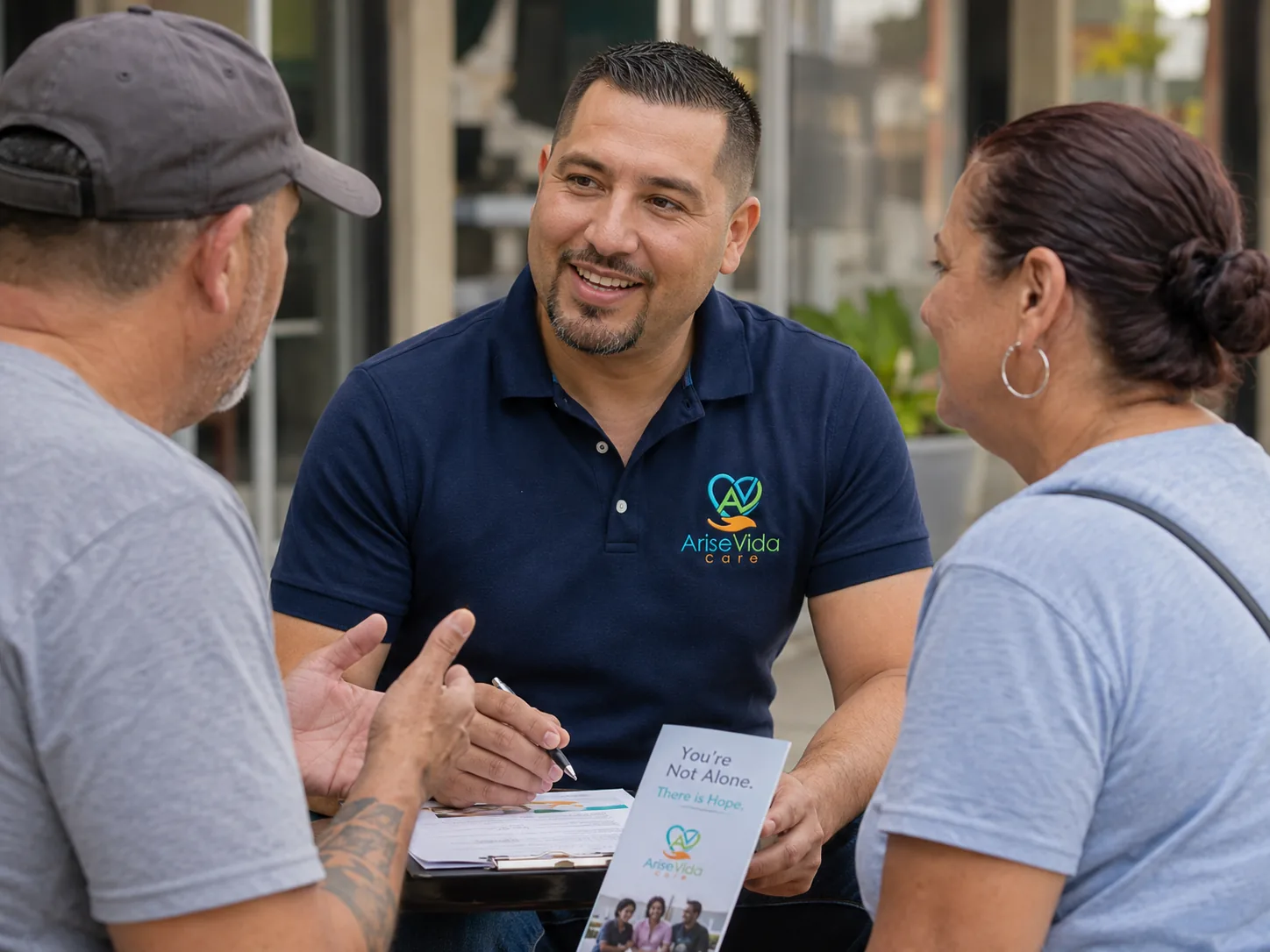
Recovery planning built around your next chapter
Relapse-prevention planning as part of a recovery plan
Continued care coordination when appropriate
Connection to peer and community support
Resource support for day-to-day stability
Connection to ongoing services when needed
Aftercare and recovery support at AriseVida Care is designed to help clients continue building stability after structured treatment. Depending on each person’s needs, this may include recovery planning, continued care coordination, peer support connection, relapse-prevention planning, resource support, and connection to ongoing services when appropriate.
This support is meant to help clients stay connected after treatment — but it is not a guarantee of long-term recovery, not emergency or crisis care, and not a replacement for clinical care when ongoing treatment is needed.
After treatment ends, life keeps moving. Many clients are still navigating real-life responsibilities, stressors, relationships, work, family, and recovery triggers — often all at once.
Aftercare support can help create a plan for staying connected to care, maintaining structure, and identifying next steps after a higher level of treatment ends. It doesn’t guarantee outcomes — but a thoughtful plan and a connected team can make the next chapter feel steadier.

How Aftercare Helps
Staying connected to a team that knows your story can help the step down from treatment feel less abrupt.
Thinking ahead about stressors and triggers is part of a strong recovery plan — planning and support, not promises.
Structure helps recovery hold its shape. Aftercare can support routines around care, work, family, and rest.
Transitions are where footing slips most easily. Continued support may help you move through change at a steadier pace.
After treatment ends, life keeps moving. Many clients are still navigating real-life responsibilities, stressors, relationships, work, family, and recovery triggers — often all at once.
Aftercare support can help create a plan for staying connected to care, maintaining structure, and identifying next steps after a higher level of treatment ends. It doesn’t guarantee outcomes — but a thoughtful plan and a connected team can make the next chapter feel steadier.
Staying connected to a team that knows your story can help the step down from treatment feel less abrupt.
Thinking ahead about stressors and triggers is part of a strong recovery plan — planning and support, not promises.
Structure helps recovery hold its shape. Aftercare can support routines around care, work, family, and rest.
Transitions are where footing slips most easily. Continued support may help you move through change at a steadier pace.
WHO MAY BENEFIT
Aftercare may be appropriate for adults who want continued connection after structured treatment — offered when appropriate, not automatically.
SUPPORT SHAPED AROUND YOU.
Aftercare may help the next phase feel supported and planned, not like an ending.
After treatment ends, support can offer check-ins, encouragement, and a plan.
Support can help routines around work, family, care, and rest take shape, depending on needs.
Aftercare can support planning around stressors and triggers — a plan and a team, not a promise.
Relationships and responsibilities can feel like a lot — support may help, one step at a time.
If appointments start to slip, aftercare may help you stay connected, when appropriate.
Aftercare and recovery support may be appropriate for adults who want continued connection to care after structured treatment. Every situation is different — support is shaped around each person’s needs and offered when appropriate, not automatically.
Finishing a structured program is a milestone, not an ending. Aftercare may help the next phase feel supported and planned.
For those who want to stay connected after treatment, continued support can offer check-ins, encouragement, and a plan.
Daily rhythms take time to rebuild. Support can help routines around work, family, care, and rest take shape, depending on needs.
Aftercare can support thoughtful planning around stressors and triggers — a plan and a team, not a promise.
Everyday relationships and responsibilities can feel like a lot at first. Continued support may help you take it one step at a time.
When follow-up appointments and services start to slip, aftercare support may help you stay connected to care when appropriate.
Continued Connection
After treatment, the next step can feel overwhelming. Aftercare is about not having to figure it out alone — staying connected to the people, services, and recovery-focused supports that may help stability continue, depending on each person’s needs.

Four Ways Connection Continues
Continued counseling may help you keep working through what treatment surfaced — at a pace that fits life after care.
For some, continued MAT or psychiatric care is part of stability. We can help you stay connected when appropriate.
Encouragement from people who understand — peer support and community resources can make recovery feel less solitary.
Case management and follow-up care planning may help the practical details stay handled, depending on needs.
After treatment, the next step can feel overwhelming. Aftercare is about not having to figure it out alone — staying connected to the people, services, and recovery-focused supports that may help stability continue, depending on each person’s needs.
Continued counseling may help you keep working through what treatment surfaced — at a pace that fits life after care.
Encouragement from people who understand — peer support and community resources can make recovery feel less solitary.
For some, continued MAT or psychiatric care is part of stability. We can help you stay connected when appropriate.
Case management and follow-up care planning may help the practical details stay handled, depending on needs.
Aftercare is practical by design. Depending on each person’s needs, our team may help with the planning, coordination, and connection that keep recovery support within reach — shaped with you, at your pace.
Helping clients think through next steps, goals, routines, and continued recovery supports after structured treatment.
Supporting connection to appropriate services, follow-up care, and care team communication when needed.
Helping clients stay connected to encouragement, lived-experience support, and recovery-focused guidance when appropriate.
Supporting planning around triggers, coping strategies, warning signs, and healthy supports — planning tools, not promised prevention.
Helping clients stay organized around appointments, referrals, community resources, and follow-up needs.
Supporting clients as they transition from IOP into a lower level of care or continued recovery support.
Depending on your needs, we may help keep recovery support within reach — planning, coordination, connection.

Think through next steps, goals, routines, and continued supports.
Connect to appropriate services and follow-up care when needed.
Stay connected to encouragement and lived-experience guidance when appropriate.
Plan around triggers and coping strategies — not promised prevention.
Stay organized around appointments, referrals, community resources, and follow-up.
Transition into lower-level care or continued recovery support.
Aftercare and recovery support helps clients stay connected to recovery planning, follow-up care, continued support, and next steps after completing or stepping down from structured treatment. It’s designed to make the transition out of structured care feel supported — it is not a guarantee of outcomes, and it is not emergency or crisis care.
Aftercare may help people stepping down from IOP, completing treatment, rebuilding routines, or wanting continued connection to support services. Every situation is reviewed individually, and support is shaped around each person’s needs.
No — aftercare recommendations depend on your needs, goals, care plan, and clinical guidance. For many people continued support is genuinely helpful, but what that looks like, and whether it’s recommended, is an individual conversation with your care team.
Depending on needs, aftercare may help with recovery planning, continued care coordination, peer support connection, relapse-prevention planning, appointments and resources, and step-down support when appropriate. No two aftercare plans look the same.
Some clients may continue with appropriate services such as therapy, psychiatric services, MAT, case management, or peer support, depending on clinical fit and availability. Your care team can help you understand which options may make sense for you.
The easiest first step is to call our admissions team during clinic hours at (602) 899-1229 — our team will review your needs, next steps, and the support options that may be available. If you’re currently in treatment with us, you can also simply bring it up with your care team.
AriseVida Admissions Team
Here to help
Free·confidential·no pressure
Most major insurance accepted·Adult outpatient care · Phoenix, AZ
Whether you are stepping down from IOP, completing treatment, or looking for continued support, our team can help review next steps and available aftercare options — for clients, families, and referral partners alike.