
Strong urges to use, difficulty stopping, or using more often than originally intended. A qualified clinician can assess the full pattern and discuss appropriate support.
Cocaine Addiction Support · Adult Outpatient Care
Cocaine Addiction Treatment, Signs, and Recovery Support.
AriseVida Care offers adult outpatient support for cocaine addiction, with counseling and behavioral health support.AriseVida Care supports adults with cocaine addiction through outpatient counseling and behavioral health care.

- Cocaine recovery supportPersonalized care planning
- Outpatient supportCounseling, IOP, recovery planning
Cocaine Addiction Treatment,
Signs, and Recovery Support.
AriseVida Care provides adult outpatient support for individuals navigating cocaine addiction, with clinical guidance, counseling, behavioral health support, psychiatric services when appropriate, and personalized recovery planning.
UNDERSTANDING COCAINE
What Is Cocaine?
-
Cocaine is an addictive stimulant made from coca leaves. Although it is a Schedule II drug with limited medical use as a local anesthetic, cocaine use outside authorized care is illegal and can cause serious, sometimes sudden health complications, including overdose.Cocaine is an addictive stimulant made from coca leaves. It is a Schedule II drug with limited medical use as a local anesthetic, but use outside authorized care is illegal and can cause serious, sometimes sudden complications, including overdose.
-
Cocaine blocks the normal recycling of dopamine in the brain, amplifying reward signals and reinforcing repeated use. It can raise heart rate, blood pressure, and body temperature and may lead to anxiety, seizures, stroke, heart attack, overdose, and cocaine use disorder.Cocaine blocks normal dopamine recycling in the brain, which reinforces repeated use. It can raise heart rate, blood pressure, and body temperature and may lead to anxiety, seizures, stroke, heart attack, overdose, and cocaine use disorder.
-
Cocaine addiction is not a character flaw or a lack of willpower. It is a treatable health condition, and support may include contingency management, cognitive behavioral therapy, counseling, ongoing recovery services, and care for co-occurring mental health needs.Cocaine addiction is not a character flaw. It is a treatable health condition, and support may include contingency management, cognitive behavioral therapy, counseling, recovery services, and care for co-occurring mental health needs.
-
Reward pathway
DOPAMINECocaine blocks dopamine recycling and amplifies reward signals.
-
Heart and circulation
CARDIOVASCULARIt can increase heart rate and blood pressure and disrupt heart rhythm.
-
Overdose risk
URGENT RISKCocaine can contribute to seizures, stroke, heart attack, and sudden death.
Understanding cocaine
What Is Cocaine?
Cocaine is a powerful stimulant drug that affects the brain and central nervous system. It can increase energy, alertness, and confidence for a short time, but repeated use may affect mood, sleep, heart health, decision-making, relationships, and daily stability.
Cocaine use can involve powder cocaine or crack cocaine, and risks may increase when it is used frequently, combined with other substances, or contaminated with opioids such as fentanyl. Over time, cocaine use may be connected with intense cravings, anxiety, irritability, paranoia, depression, financial stress, and difficulty stopping.
Cocaine addiction is not a character flaw or a lack of willpower. It is a treatable health condition, and support may include counseling, behavioral therapy, psychiatric support, structured outpatient care, and ongoing recovery planning.
Signs, safety & statistics
Cocaine Addiction Signs, Stimulant Overdose Warning Signs, and Key Statistics
Understanding cocaine addiction warning signs, stimulant overdose risks, opioid co-involvement concerns, and current data can help patients and families recognize when it may be time to seek clinical support.Knowing cocaine addiction warning signs, stimulant overdose risks, opioid co-involvement, and current data can help patients and families recognize when it may be time to seek clinical support.
Explore the information
Potential Signs of Cocaine Addiction
Cocaine addiction can look different from person to person, but it often involves a pattern of use that begins to affect sleep, mood, health, relationships, work, school, safety, finances, or daily stability.
Irritability, anxiety, paranoia, depression, emotional swings, or difficulty calming down. A qualified clinician can assess the full pattern and discuss appropriate support.
Staying awake for long periods, exhaustion, restlessness, or major shifts in sleep patterns. A qualified clinician can assess the full pattern and discuss appropriate support.
Financial stress, secrecy, missed responsibilities, relationship strain, work or school problems, or risky decisions. A qualified clinician can assess the full pattern and discuss appropriate support.
Sources:SAMHSA 2024 NSDUH
Signs of a Stimulant Overdose
A cocaine or stimulant overdose can be a medical emergency and requires immediate action.
Chest pain or irregular heartbeat can be an urgent warning sign. Call 911 immediately and stay with the person until help arrives. Naloxone only addresses possible opioid exposure; it does not reverse stimulant toxicity.
Severe agitation, panic, or confusion can be an urgent warning sign. Call 911 immediately and stay with the person until help arrives. Naloxone only addresses possible opioid exposure; it does not reverse stimulant toxicity.
Very high body temperature can be an urgent warning sign. Call 911 immediately and stay with the person until help arrives. Naloxone only addresses possible opioid exposure; it does not reverse stimulant toxicity.
Seizures or fainting can be an urgent warning sign. Call 911 immediately and stay with the person until help arrives. Naloxone only addresses possible opioid exposure; it does not reverse stimulant toxicity.
Severe headache or stroke-like symptoms can be an urgent warning sign. Call 911 immediately and stay with the person until help arrives. Naloxone only addresses possible opioid exposure; it does not reverse stimulant toxicity.
Trouble breathing or loss of consciousness can be an urgent warning sign. Call 911 immediately and stay with the person until help arrives. Naloxone only addresses possible opioid exposure; it does not reverse stimulant toxicity.
A cocaine or stimulant overdose can be a medical emergency and requires immediate action. Warning signs may include chest pain, irregular heartbeat, severe agitation, confusion, panic, very high body temperature, seizures, fainting, severe headache, trouble breathing, loss of consciousness, or stroke-like symptoms.
If an overdose is suspected, call 911 immediately. If opioids or fentanyl may be involved, use naloxone if available.
Cocaine Use and Stimulant Overdose Statistics
Cocaine use and stimulant-involved overdose remain serious public health concerns.
Young adults ages 18–25 used cocaine in the past year in 2024.
SAMHSA · 2024 NSDUHCocaine-involved overdose deaths that co-involved opioids during Jan. 2021–Jun. 2024.
CDC · MMWRAdults age 26 and older used cocaine in the past year in 2024.
SAMHSA · 2024 NSDUH4.3MPast-year cocaine use · 2024
4.3MCNS stimulant use disorder · 2024
69,973Predicted total overdose deaths · 12 months ending Dec 2025
28,722Psychostimulant-involved overdose deaths · 2024
21,945Cocaine-involved overdose deaths · 2024
U.S. · 2024 · people and deaths compared
Cocaine Addiction Signs, Stimulant Overdose Warning Signs, and Key Statistics
Understanding cocaine addiction warning signs, stimulant overdose risks, opioid co-involvement concerns, and current data can help patients and families recognize when it may be time to seek clinical support.Knowing cocaine addiction warning signs, stimulant overdose risks, opioid co-involvement, and current data can help patients and families recognize when it may be time to seek clinical support.
Recognizing the signs
Potential Signs of Cocaine Addiction
Cocaine addiction can look different from person to person, but it often involves a pattern of use that begins to affect sleep, mood, health, relationships, work, school, safety, finances, or daily stability. Signs may include intense cravings, using more often than intended, difficulty stopping, irritability, anxiety, paranoia, mood swings, secrecy, impulsive decisions, financial stress, or continuing to use despite negative consequences.
These signs do not mean someone has failed. They may be signals that clinical support, counseling, behavioral health care, and treatment options should be explored.
In an emergency
Signs of a Stimulant Overdose
A cocaine or stimulant overdose can be a medical emergency and requires immediate action. Warning signs may include chest pain, irregular heartbeat, severe agitation, confusion, panic, very high body temperature, seizures, fainting, severe headache, trouble breathing, loss of consciousness, or stroke-like symptoms.
If an overdose is suspected, call 911 immediately. If opioids or fentanyl may be involved, use naloxone if available.
Cocaine-involved overdoses may also involve opioids, including fentanyl.
By the numbers
Cocaine Use and Stimulant Overdose Statistics
Cocaine use and stimulant-involved overdose remain serious public health concerns. Current national data shows that cocaine use affects millions of people each year, and many cocaine-involved overdose deaths also involve opioids.
811,000
Young adults ages 18–25 used cocaine in the past year in 2024.
SAMHSA · 2024 NSDUH
79.1%
Cocaine-involved overdose deaths that co-involved opioids during Jan. 2021–Jun. 2024.
CDC · MMWR
3.4million
Adults age 26 and older used cocaine in the past year in 2024.
SAMHSA · 2024 NSDUH
Overdose awareness
Cocaine overdose risk can increase when opioids, fentanyl, alcohol, or other substances are also involved.
Cocaine use includes crack cocaine, and CNS stimulant use disorder includes people who used cocaine, methamphetamine, or prescription stimulants. Overdose deaths may involve more than one drug, and cocaine-involved deaths may also involve opioids, including fentanyl.
Understanding cocaine addiction
Understanding Cocaine Addiction
Why understanding cocaine addiction matters, what it can affect when left untreated, and what a supportive path forward can look like.
Why Understanding Matters
Know the signs. Reduce shame. Find support. 5 benefits


Understanding cocaine addiction can help patients and families make sense of changes in mood, sleep, energy, relationships, finances, responsibilities, and daily stability.
Understanding can help you:
- Notice cravings and patterns sooner
- Reduce shame and fear
- Connect to behavioral support
- Understand stimulant treatment options
- Build a steadier recovery plan

Read the full explanation

Understanding cocaine addiction can help patients and families make sense of changes in mood, sleep, energy, relationships, finances, responsibilities, and daily stability. Cocaine addiction is a treatable health condition , and recognizing the pattern early may help someone connect with clinical support before the consequences become more severe.Understanding cocaine addiction can help patients and families make sense of changes in mood, sleep, energy, relationships, finances, responsibilities, and daily stability. It is a treatable health condition, and recognizing the pattern early may help someone reach clinical support sooner.
Support can look different for each person, and the right approach often changes over time. For some patients, care may include counseling, behavioral therapy , psychiatric support, IOP, recovery planning, and coordinated outpatient care.Cocaine recovery support can look different for each person and often changes over time. For some patients, care may include counseling, behavioral therapy, psychiatric support, IOP, recovery planning, and coordinated outpatient care.
Understanding also helps the people closest to someone who is struggling. When families and loved ones know that cocaine addiction is a medical condition, they can respond with patience and compassion instead of blame — which often makes it easier for someone to reach out for help.When families and loved ones know that cocaine addiction is a medical condition, they can respond with patience and compassion instead of blame — often making it easier for someone to reach out for help.
Risks & Effects
See the six areas addiction can affect. 6 areas


When cocaine addiction goes untreated, it can affect health, relationships, work, finances, safety, and legal stability.
Recognizing these risks is not about judgment — it is about understanding why support, treatment planning, and early intervention matter.Recognizing cocaine’s risks is not about judgment — it is about why support, treatment planning, and early intervention matter.
Six areas to be aware of:
- Physical & mental health
- Family & relationships
- Work & responsibilities
- Housing & stability
- Personal safety
- Legal stability


The Path Forward
Explore treatment and recovery support. 5 ways we can help


Cocaine addiction recovery support can look different for each person. At AriseVida Care, care may include counseling, behavioral therapy, psychiatric services , IOP , and ongoing recovery planning when clinically appropriate.Cocaine recovery support can differ for each person. At AriseVida Care, care may include counseling, behavioral therapy, psychiatric services, IOP, and ongoing recovery planning when clinically appropriate.
A supportive path may include:
- Clinical assessment and personalized planning
- Behavioral therapy and relapse-prevention support
- Counseling and behavioral health support
- Psychiatric support when needed
- Ongoing recovery planning and care coordination


Understanding Cocaine Addiction
Why understanding cocaine addiction matters, what it can affect when left untreated, and what a supportive path forward can look like.
The bigger picture
Why Understanding Cocaine Addiction Matters
Notice cravings and patterns sooner
Reduce shame and fear
Connect to behavioral support
Understand stimulant treatment options
Build a steadier recovery plan
Understanding cocaine addiction can help patients and families make sense of changes in mood, sleep, energy, relationships, finances, responsibilities, and daily stability. Cocaine addiction is a treatable health condition, and recognizing the pattern early may help someone connect with clinical support before the consequences become more severe.
Support can look different for each person, and the right approach often changes over time. For some patients, care may include counseling, behavioral therapy, psychiatric support, IOP, recovery planning, and coordinated outpatient care.
Understanding also helps the people closest to someone who is struggling. When families and loved ones know that cocaine addiction is a medical condition, they can respond with patience and compassion instead of blame — which often makes it easier for someone to reach out for help.When families and loved ones know that cocaine addiction is a medical condition, they can respond with patience and compassion instead of blame — often making it easier for someone to reach out for help.
Physical and mental health
Family and social relationships
Work and daily responsibilities
Why it matters
Risks & Effects
When cocaine addiction goes untreated, it can affect health, relationships, work, finances, safety, and legal stability. Recognizing these risks is not about judgment — it is about understanding why support, treatment planning, and early intervention matter.
Housing and stability
Personal safety
Legal stability
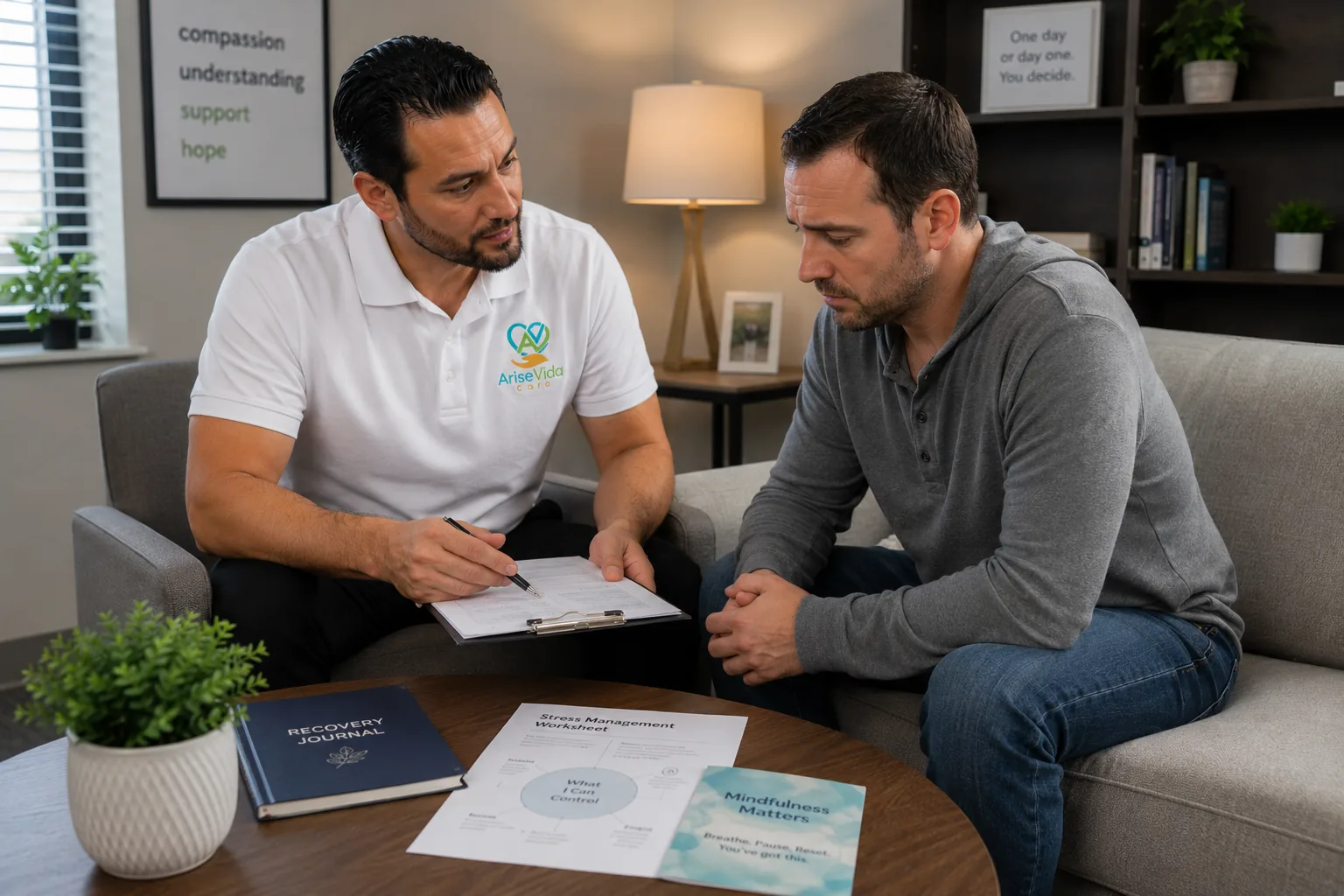
Looking ahead
The Path Forward
Cocaine addiction recovery support can look different for each person. At AriseVida Care, care may include counseling, behavioral therapy, psychiatric services, IOP, and ongoing recovery planning when clinically appropriate.
- Clinical assessment and personalized planning
- Behavioral therapy and relapse-prevention support
- Counseling and behavioral health support
- Psychiatric support when needed
- Ongoing recovery planning and care coordination
Frequently asked
Cocaine Addiction FAQs.
-
Cocaine addiction is a treatable health condition that can develop when cocaine use begins to affect a person’s mood, sleep, health, responsibilities, relationships, safety, or daily stability.Cocaine addiction is a treatable health condition that can develop when use begins to affect mood, sleep, health, responsibilities, relationships, safety, or daily stability.
-
Signs may include intense cravings, difficulty stopping, using more often than intended, irritability, anxiety, paranoia, mood swings, secrecy, financial stress, risky decisions, or continuing to use despite harm.Signs may include intense cravings, difficulty stopping, using more often than intended, irritability, anxiety, paranoia, mood swings, secrecy, financial stress, risky decisions, or continued use despite harm.
-
Yes. Cocaine addiction is treatable, and support may include counseling, behavioral therapy, psychiatric services, structured outpatient care, and ongoing recovery planning.
-
There is currently no FDA-approved medication specifically for cocaine use disorder. However, AriseVida Care may provide counseling, behavioral health support, psychiatric care, and coordinated outpatient support for co-occurring needs when clinically appropriate.There is currently no FDA-approved medication specifically for cocaine use disorder. AriseVida Care may provide counseling, behavioral health support, psychiatric care, and support for co-occurring needs when clinically appropriate.
-
No. AriseVida Care is an adult outpatient behavioral health and recovery clinic. We do not operate as a detox facility, inpatient rehab, crisis center, or emergency psychiatric program.
-
Patients can contact AriseVida Care to begin the admissions process, discuss treatment needs, verify insurance, and review what level of outpatient support may be clinically appropriate.Patients can contact AriseVida Care to begin admissions, discuss cocaine treatment needs, verify insurance, and review what outpatient support may be clinically appropriate.

AriseVida Admissions Team
Here to help


Free·confidential·no pressure
Most major insurance accepted·Adult outpatient care · Phoenix, AZ
Take the first step
Cocaine addiction support starts with a conversation.
AriseVida Care provides adult outpatient support for individuals navigating cocaine addiction, with clinical guidance, counseling, psychiatric support, behavioral health care, and personalized recovery planning. See all the addictions we treat.
100% confidential
Most major insurance accepted
Adult outpatient care · Phoenix, AZ